
Imagine you walk into your school library. You run to the “New Arrivals” shelf, hoping to find the latest superhero comic or the newest adventure book. But when you get there, you see… nothing. It’s the same dusty books from last year. And the year before that.
Would you keep going back to that shelf every day? Probably not. You’d get bored and stop visiting.
Well, search engines like Google are the same! They are like giant, digital librarians, and they love new things.
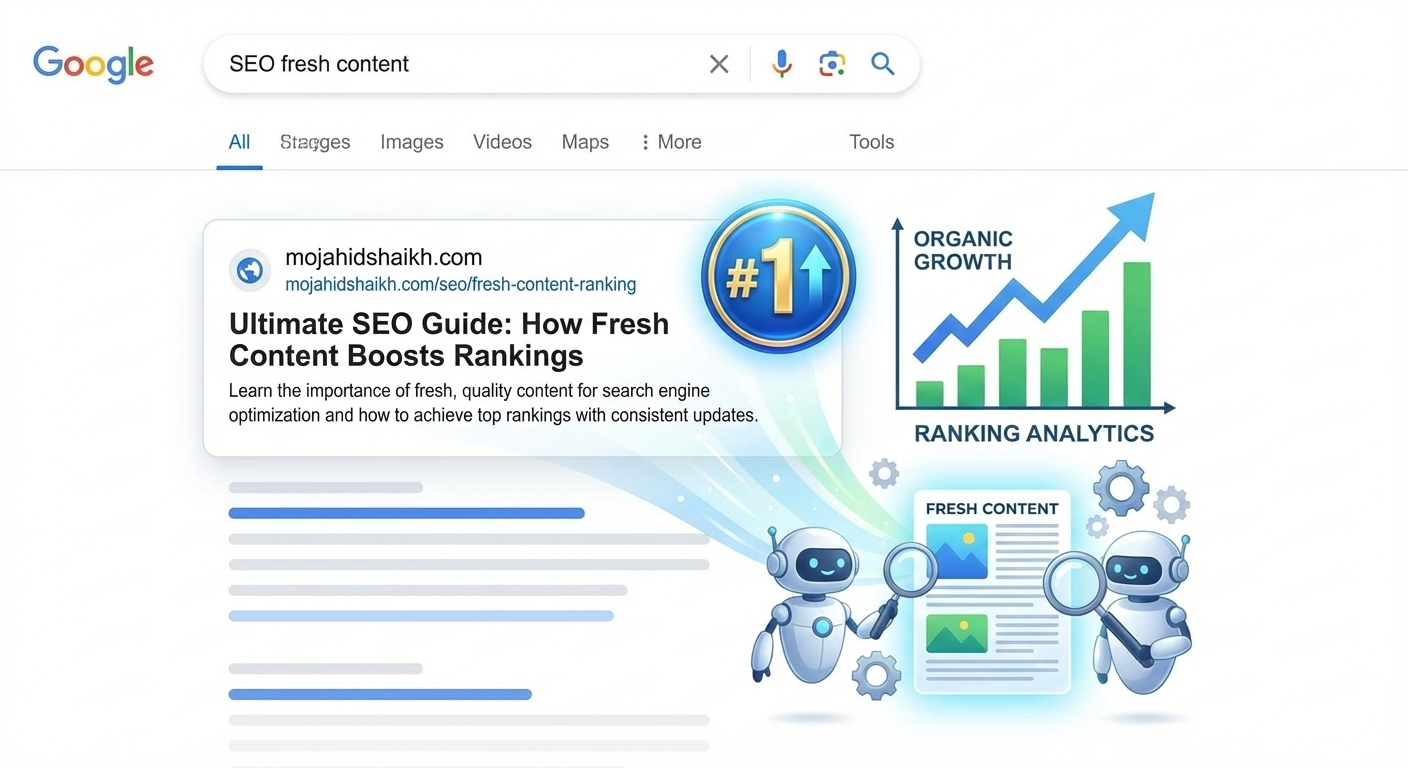
If you have a website or a blog, you want to be “Ranked” #1. That means you want to be the very first thing people see when they search for something. To do that, you need Fresh Content.
But why? What is the big secret? Grab a snack, get comfortable, and let’s dive into the world of Fresh Content to see why it helps you win the high score on the internet!
Part 1: What is “Fresh Content”?
Before we talk about why we need it, we have to know what it is.
Fresh Content isn’t just about creating something brand-new today. It actually means a few different things:
- Brand New Posts: Writing a completely new story or article that didn’t exist before.
- Updating Old Stuff: Taking an old article you wrote last year and fixing it up. You could add new pictures, fix spelling mistakes, or add new facts.
- Breaking News: Writing about something that is happening right now in the world.
Think of your website like a garden. “Fresh Content” is watering the plants, trimming the dead leaves, and planting new seeds. If you don’t do this, your garden turns into a jungle of weeds!
Part 2: The Giant Spider (The Crawler)
Here is a secret: Google isn’t a person. It’s a computer program. We call this program a Spider or a Crawler.
Imagine a tiny, friendly robot spider that crawls all over the internet. It jumps from one website to another via links (like a spider web). Its job is to find cool stuff to show people.
The “Hungry Spider” Rule
This robot spider is always hungry for information.
- If you post every day, the spider learns, “Oh! This house always has fresh food!” It will come to visit your house every single day to see what you cooked.
- If you never post, the spider thinks, “This house is empty. I won’t come back for a long time.”
Why this helps your Rank: If the spider visits you often, your new articles appear on Google much faster. If the spider ignores you, you might write the best story in the world, but nobody will find it because the spider hasn’t visited you in months!
Part 3: The 5 Big Reasons Freshness Wins the Game
Okay, so we know the Spider likes food. But why does freshness actually make you rank higher? Let’s break it down into five simple reasons.
Reason 1: The “New News” Rule (Relevance)
Imagine you are looking for the “Best Video Games of 2024.” You search on Google, and you see two articles:
- Article A: Written in 2015.
- Article B: Written last week.
Which one would you click? You’d click Article B, right? Article A probably talks about games on the old PlayStation 3! That doesn’t help you today.
Google wants to be the “Best Librarian.” It wants to give you the most helpful answer. If your content is fresh, Google knows it is current and relevant. It trusts that your information isn’t old and dusty.
Reason 2: More Keys to More Doors (Keywords)
Think of the internet like a giant hallway with millions of doors. To open a door, you need a key. In the world of websites, these keys are called Keywords.
Keywords are the words people type into the search bar, like “how to bake cookies” or “funny cat videos.”
- Every time you write a new post, you create a new key.
- The more fresh content you create, the more keys you have.
- The more keys you have, the more doors you can open!
If you only have five articles, you can only be found for five topics. But if you have 100 fresh articles, people can find you for 100 different things!
Reason 3: The Popularity Contest (User Engagement)
Google is watching how people behave on your site. This is like a popularity contest.
If you update your site often, your friends (and strangers) will keep coming back to see what’s new. They might stay longer to read your latest stories. They might share your link with their friends.
Google sees this and says:
“Wow! Look at all these kids hanging out at this website. They are staying for a long time and having fun. This must be a cool place. I’m going to move this website up to the #1 spot!”
But if your site is outdated, people leave quickly. Google sees that, too, and it drops your rank.
Reason 4: The “QDF” Factor
This sounds fancy, but it stands for Query Deserves Freshness.
Sometimes, Google knows that people want the newest thing, not the best thing.
- Example: If you search for “Who won the football game last night?”, you don’t care about a game from 10 years ago. You need the Fresh Content right now.
For specific topics (like sports, weather, or new movies), Fresh Content is the only way to rank. If you don’t have the latest info, you don’t exist.
Reason 5: Earning “Votes” (Backlinks)
In the website world, a link from another website to yours is like a “Vote.”
- If a big website links to you, it tells Google: “I trust this kid. Their content is good.”
People love to link to new, exciting stuff. They rarely link to old, boring stuff.
- If you write a fresh article with new facts that nobody else has, other people will say, “Hey, look at this new info!” and link to you.
- These links act like rocket fuel for your ranking!
Part 4: Does “Fresh” Mean “Brand New”?
This is a fundamental question. NO!
You don’t always have to write a brand-new story from scratch. Sometimes, the best way to get Fresh Content is to polish your old trophies.
Imagine you wrote a guide called “How to Play Minecraft” three years ago. It was an excellent guide! But now, Minecraft has changed. There are new blocks and new monsters.
Instead of writing a whole new guide, you can open your old one and:
- Change the title to “How to Play Minecraft (2024 Update)”.
- Add pictures of the new monsters.
- Delete the parts that no longer work.
Boom! Google sees this update. It notices the date changed. It notices the new text. It treats this as Fresh Content!
Updating old content is actually a superpower. It’s easier than starting from scratch, and it keeps your old hard work shining bright.
Part 5: The “Quality” Trap (Warning!)
Now, listen carefully. This is where many people mess up.
Because they know Google loves Fresh Content, they try to trick the robot. They write 10 short, boring, useless articles every day to look “fresh.”
Do not do this.
Imagine a bakery.
- Bakery A makes one amazing, delicious, hot chocolate cake every week.
- Bakery B throws burnt, dry toast at you every hour.
Which bakery is better? Bakery A!
Google is smart. It’s getting smarter every day. If you produce “Fresh Garbage,” Google will know. It will be seen that people click on your page and immediately leave because the content is harmful. This will hurt your rank.
The Golden Rule: > Freshness is good. But Quality is King.
Ideally, you want Fresh Quality.
Part 6: Your Action Plan
Okay, future internet superstar. You want to rank #1. Here is your checklist to keep your content fresh and tasty:
- The Calendar: Make a schedule. Decide to post something once a week or once a month. Stick to it! Consistency feeds the spider.
- The Review: Once every few months, look at your old articles. Are they still true? Do the links still work? If not, fix them!
- The Trend: Keep an eye on what your friends are talking about. If everyone is talking about a new movie, write about it now, not next year.
- The Twist: If you write about something boring, give it a fresh twist! Add your own funny drawings or a video.
Conclusion: Keep it Alive!
So, why do we need fresh content for ranking?
Because the internet is alive! It changes every second. Google wants to reflect that life. It wants to show users the most exciting, current, and helpful world possible.
If you let your website gather dust, you become invisible. But if you keep adding new stories, updating your old facts, and inviting the Spider over for dinner regularly, you will climb the ladder.
Think of your content like a river. A flowing river is fresh, clear, and full of life. A stopped river becomes a stagnant, muddy swamp.




2025 Md. Mojahid Shaikh. All Rights Reserved.