Google continues to refine its search policies to protect users. One of the latest changes targets a deceptive tactic known as back button hijacking. This update is not just technical. It directly affects how users interact with websites and how Google evaluates trust.
If you run a website, ignoring this update can cost you rankings, traffic, and credibility. This guide explains everything in simple terms so you can stay safe and build a better site.
What Is Back Button Hijacking?
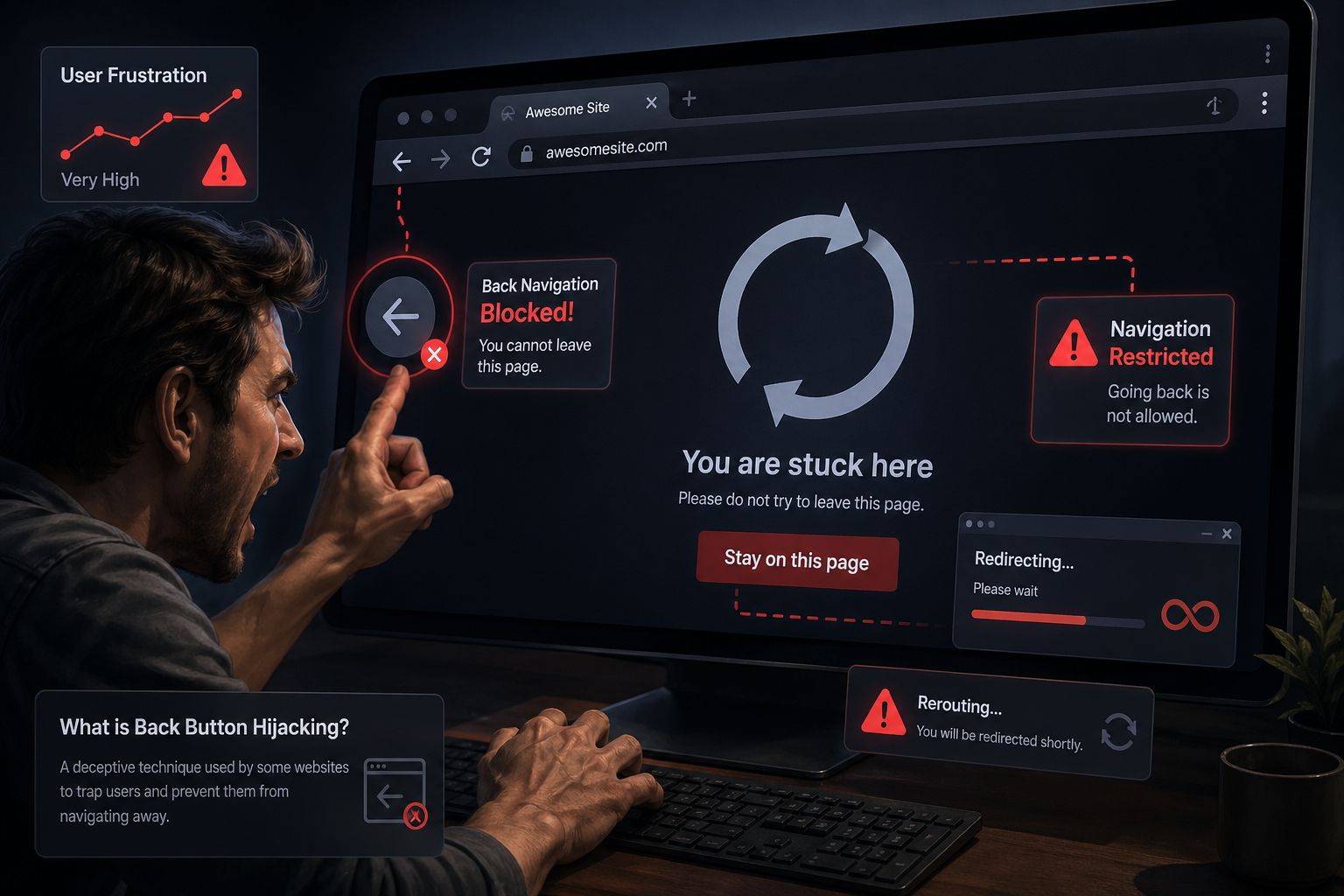
Back button hijacking is a technique where a website interferes with a user’s browser behavior. Instead of allowing users to go back to the previous page, the site blocks or redirects that action.
For example, when a user clicks the back button:
- The page reloads instead of going back
- The user is redirected to another page
- A pop-up or script prevents navigation
This creates a frustrating experience. The user feels trapped on the website.
In simple words, it is an attempt to force users to stay on a page against their will.
How Back Button Hijacking Works
This practice usually relies on JavaScript tricks. Developers manipulate browser history using scripts such as:
- Adding fake entries to the browser history
- Overriding back button behavior
- Triggering redirects when users try to leave
These methods do not improve user experience. They only try to artificially increase session time.
Why You Should Not Use It
Back-button hijacking violates basic web principles. The internet is built on user control. When you take that control away, it damages trust.
Here are the main reasons to avoid it:
- It creates a poor user experience
- It feels deceptive and manipulative
- Users lose trust in your site
- It increases frustration and exit intent
Google now considers this behavior a form of spam.
What Happens If You Use It?
Using back button hijacking can lead to serious consequences. Google has clearly stated that this practice can trigger manual penalties.
Here are the risks:
- Loss of search rankings
- Pages removed from Google index
- Manual action penalties
- Drop in organic traffic
- Damage to brand reputation
Even if you rank well now, using such tactics can quickly undo your progress.
Why Google Introduced This Update
Google’s main goal is simple: to serve the best experience to users.
Back-button hijacking directly undermines that goal. It traps users and prevents smooth navigation. Over time, Google has seen an increase in sites using such tricks to manipulate engagement metrics.
This update was introduced to:
- Protect users from manipulation
- Ensure fair competition among websites
- Promote ethical SEO practices
- Improve overall browsing experience
Google wants websites to earn attention, not force it.
The Bigger Picture: Shift Toward Ethical SEO
This update is part of a larger shift. Google is moving away from tricks and focusing on real value.
Websites that win today follow these principles:
- Provide useful and relevant content
- Respect user control
- Offer fast and smooth navigation
- Build trust over time
Any tactic that tries to cheat these principles is being removed.
Signs Your Website May Have This Issue
Sometimes, site owners use scripts without realizing the impact they have. You should check your site if you notice:
- Users complain about navigation issues
- The back button does not work properly
- Pages reload unexpectedly
- Redirect loops occur
Even third-party plugins or ads can cause this problem.
How to Stay Safe From This Update
Avoiding penalties is not difficult if you follow clean practices. Focus on user-first design.
Here are the key steps:
- Do not use scripts that block browser navigation
- Avoid forced redirects when users click back
- Remove any pop-ups that trap users
- Test your site regularly on different devices
Also, review your plugins and themes. Some tools include hidden scripts that can cause issues.
Better Alternatives to Increase Engagement
Instead of forcing users to stay, give them a reason to stay.
You can improve engagement by:
- Writing helpful and clear content
- Adding internal links to guide users
- Improving page speed
- Using a clean design and layout
- Offering related articles
When users find value, they stay naturally.
Technical Best Practices
To ensure your site is clean and compliant:
- Use proper navigation structure
- Keep browser behavior standard
- Avoid unnecessary JavaScript manipulation
- Follow Google’s guidelines
Regular audits can help you catch problems early.
Real Impact on SEO
This update is not just about one tactic. It reflects a bigger change in ranking signals.
Google now looks closely at:
- User satisfaction
- Navigation ease
- Trust signals
If your site disrupts these areas, it will struggle to rank.
Final Thoughts
Back button hijacking is not a smart SEO tactic. It is a shortcut that leads to long-term damage.
Google’s update makes one thing clear. Websites must respect users. If you focus on value, clarity, and trust, you will not need tricks.
Build a site that users want to stay on, not one they are forced to stay on.
That is the future of SEO.